


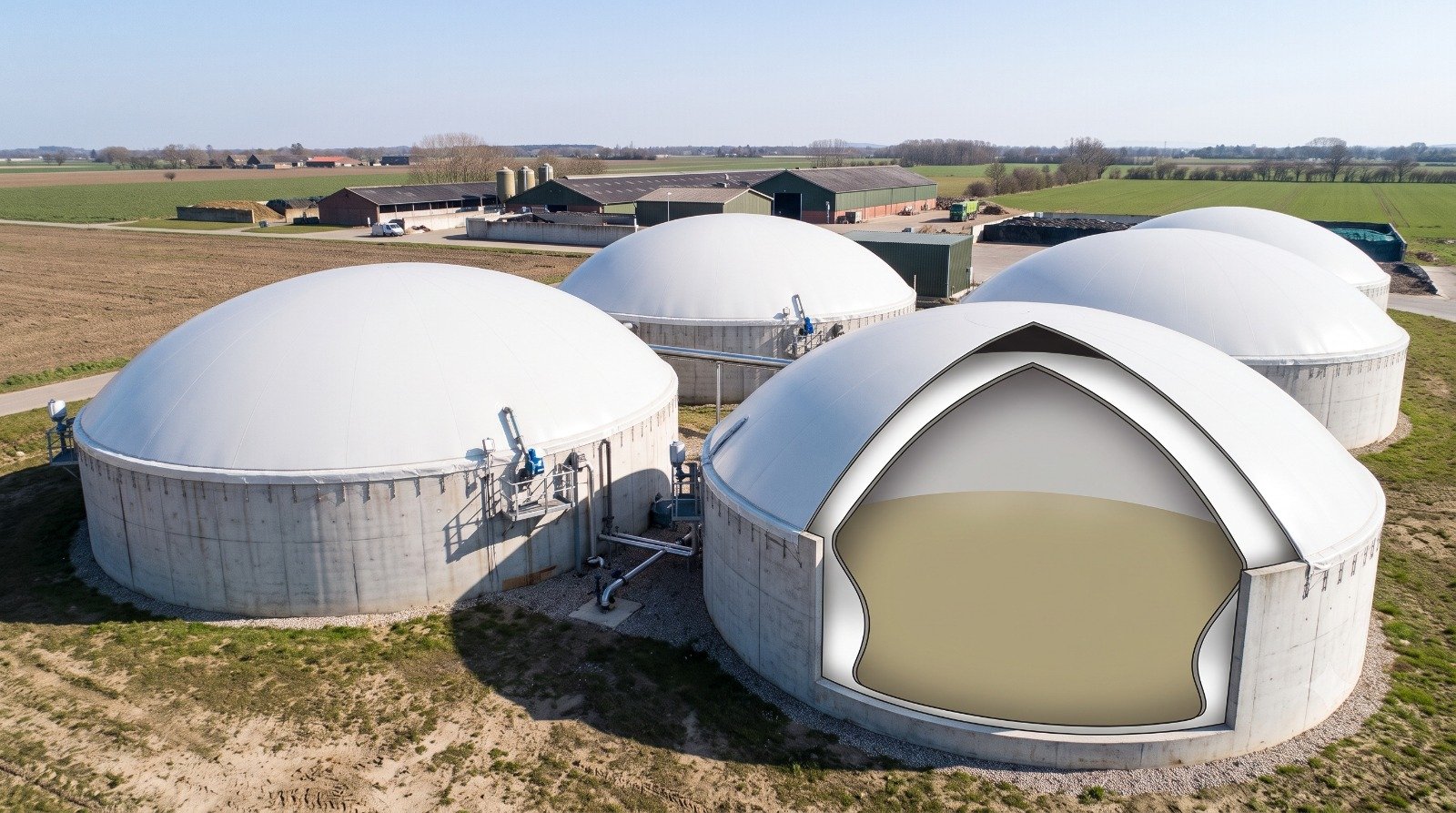
If you have ever seen a large fabric tank cover sitting over a biogas plant at a dairy farm, hotel, or housing colony, you have already seen a biogas covers system at work.
It looks like a simple fabric sheet, but it is actually a specially engineered cover built to hold in gas, resist weather, and survive years of chemical exposure.
This blog explains what biogas covers are, how they work, and where they are used. It is written for anyone doing early-stage research on this product line, including facility managers, engineers, and procurement teams who are just starting to explore this technology.
What Are Biogas Covers?
Biogas covers are fabric covers made from specially treated PVC-coated material, designed to sit over biogas tanks and hold in the gas produced from organic waste.
These covers are not ordinary tarpaulins. They are engineered fabrics treated with chemicals that resist fire, UV rays, weather, rot, and abrasion.
This makes them suitable for long-term outdoor use over biogas storage tanks, even in harsh sun, rain, and chemical conditions.
If you are exploring pvc coated fabric for beginners content, biogas covers are a good starting point, since the fabric technology used here applies across many other technical textile products as well.
How Does Biogas Covers Work?
Understanding how does biogas covers work starts with looking at what the fabric actually needs to withstand once it is placed over a biogas tank.
Why Gas Resistance Matters
Biogas contains methane, hydrogen, carbon monoxide, carbon dioxide, and traces of sulphides and ammonia.
The cover fabric must resist all of these gases without breaking down or letting gas escape. This is why ordinary plastic sheets or HDPE covers are not a safe long-term option.
Why Weldability Matters
Biogas tanks are often large, so the fabric needs to be joined in sections to form one continuous cover.
PVC-coated fabric is dull embossed specifically so it can be welded cleanly, creating strong, gas-tight seams instead of stitched joints that could leak.
Why Hydrolytic Resistance Matters
Hydrolytic resistance means the fabric resists chemical reactions that could cause sparking.
This is a critical safety feature for biogas covers, since the tank environment involves flammable gases and constant moisture exposure.
Why Choose PVC Coated Fabric Over Other Materials?
Compared to HDPE, rubber, or other plastic sheets, PVC-coated fabric offers several practical advantages for biogas structures.
- Very long service life with minimal degradation.
- Special lacquering that resists greasy and non-greasy biomass waste.
- Lightweight and flexible, giving more freedom in tank size and shape.
- Higher tensile strength than standard plastic sheeting.
- Flame resistant with strong UV and abrasion resistance.
- Fully recyclable at the end of its service life.
For anyone comparing options, working with a proven pvc coated fabric manufacturer supplier in india makes it easier to get fabric that is tested for all of these properties together, rather than sourcing an untested alternative.
What Are the Applications of Biogas Covers?
There are many real-world biogas covers applications across residential, commercial, and industrial settings in India.
- Biogas covers for hotels and hostels managing food waste.
- Biogas covers for hospitals handling organic waste disposal.
- Biogas covers for housing colonies with community biogas plants.
- Biogas covers for dairy farms processing cattle waste.
- Biogas covers for factory canteens and food processing industries.
- Biogas covers for fish and vegetable markets managing organic waste at scale.
How to Choose a Biogas Covers Manufacturer in India?
Choosing the right biogas covers manufacturer india partner is just as important as the fabric specification itself.
- Ask for fabric test data covering gas resistance, tensile strength, and UV stability.
- Check whether the manufacturer can supply fabric weight suited to your tank size and usage conditions.
- Look for a supplier experienced specifically in Biogas Cover Fabrics Manufacturer In india, since general tarpaulin makers may not test for gas resistance or hydrolytic stability.
Lucky International, a Mumbai-based manufacturer, supplies PVC and PVDF coated fabric for biogas covers along with a wider range of technical textile products, so the same fabric expertise carries across multiple applications. You can see their biogas cover range here.
Conclusion
Biogas covers may look like a simple fabric sheet, but they are built on real engineering. Gas resistance, weldability, and hydrolytic stability all matter far more here than in a standard tarpaulin.
For facility managers and engineers exploring this product line for the first time, the key takeaways are the fabric's gas resistance, its weldable construction, and the importance of choosing a manufacturer like Lucky International who can prove fabric performance with test data rather than assumptions.
FAQs
What are biogas covers made of?
Biogas covers are made from PVC-coated polyester fabric, treated to resist fire, UV rays, weather, rot, and abrasion.
How does a biogas cover work?
The fabric forms a sealed, weldable cover over the biogas tank that resists methane, hydrogen, carbon dioxide, and other gases while withstanding weather and chemical exposure.
Where are biogas covers used?
Biogas covers are used in hotels, hostels, hospitals, housing colonies, dairy farms, factory canteens, food processing units, and fish or vegetable markets.
Why is PVC coated fabric better than HDPE for biogas covers?
PVC coated fabric offers longer service life, better flexibility, higher strength, stronger flame and UV resistance, and full weldability compared to HDPE or rubber sheets.
How do I choose a biogas cover fabric manufacturer in India?
Look for a manufacturer who provides fabric test data, offers the right fabric weight for your tank size, and has proven experience specifically with biogas and gas-resistant fabric applications.