


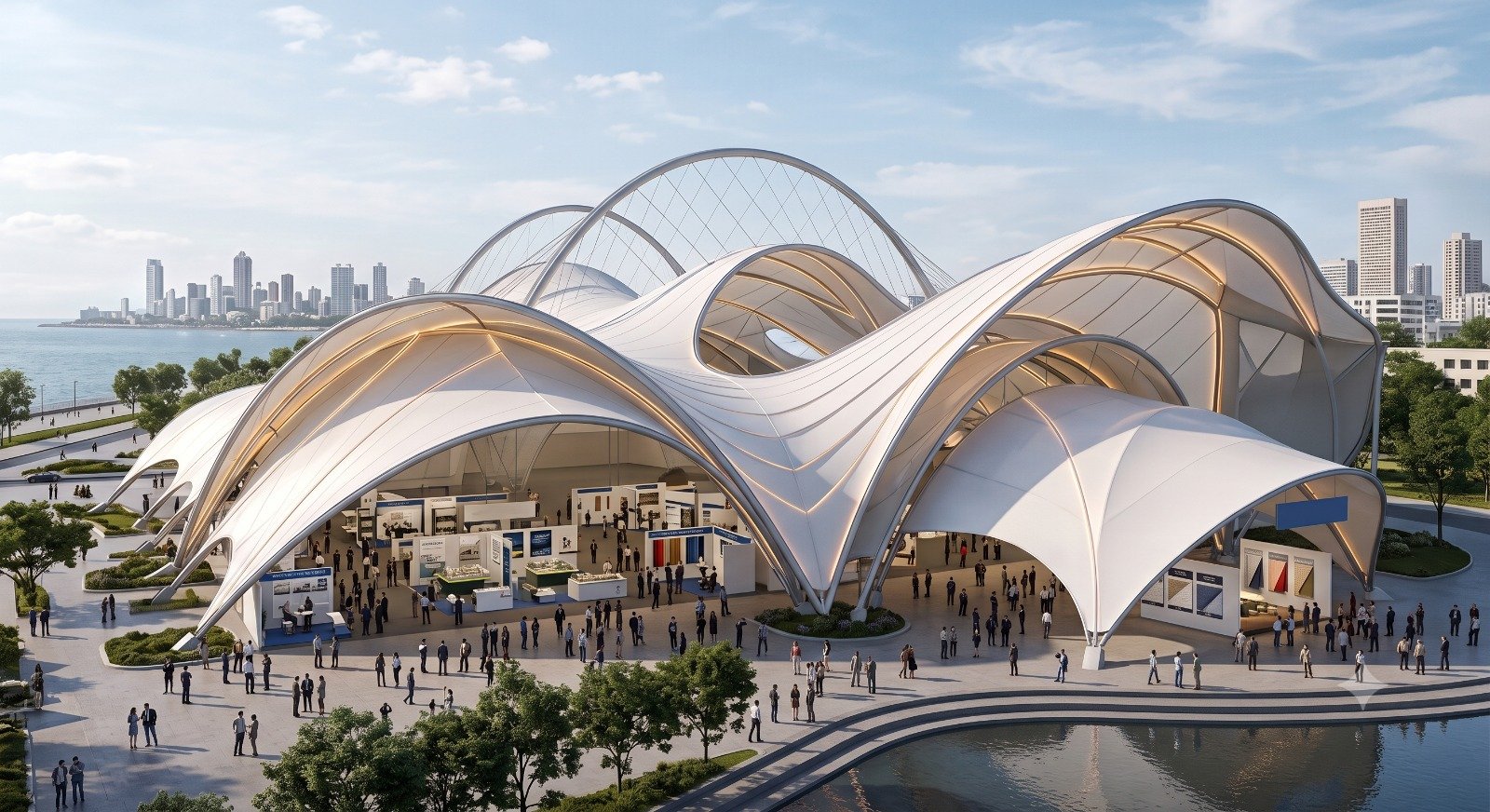
Tensile Membrane Structures Specifications, Sizing and Installation Guide
If you are an architect, procurement manager, vendor, dealer or business owner exploring a large span project, you are likely at the stage where general information is not enough. You need real tensile membrane structures specifications, sizing data and installation details before you can move forward with a quote. This guide covers exactly that, in simple and direct language, so you can evaluate the project scope quickly and start a conversation with the right supplier.
What Are Tensile Membrane Structures
Tensile membrane structures are architectural systems where a fabric membrane is stretched and anchored under tension across a supporting frame or cable network. They are widely used for:
- Exhibition halls and event venues
- Stadium and sports facility roofing
- Airport terminals and canopies
- Large span industrial and commercial buildings
Unlike a traditional roof, the strength of a tensile structure comes from the tension in the fabric itself, combined with the supporting frame or cables. This makes it a strong business opportunity for vendors and dealers who want to enter the architectural fabric space.
Tensile Membrane Structures Specifications
Before requesting a quote, architects and engineers usually need clear tensile membrane structures specifications covering material, strength and performance.
Fabric Material Specification
- Base fabric, usually polyester or fiberglass
- Coating type, commonly PVC coated fabric project specification or PTFE coating
- Tensile strength in both warp and weft direction
- Tear strength rating
- Fire rating certification
Structural Specification
- Frame material, usually steel or aluminium
- Cable type and anchor system
- Wind load and snow load design values
- Foundation and anchoring requirements
Optical and Weather Performance
- Light transmission percentage
- UV resistance
- Waterproof rating
- Self cleaning or low dirt pickup surface
Tensile Membrane Structures Sizing
Sizing is one of the first questions architects ask before finalizing a design. Correct tensile membrane structures sizing depends on a few factors.
- Span width between supporting points
- Height and curvature needed for water drainage
- Number of anchor points or masts required
- Load requirements based on local wind and snow data
- Purpose of the structure, such as exhibition space, parking shade or stadium roof
A membrane structure that is undersized for its span can sag or develop water pooling. An oversized structure adds unnecessary cost. This is why sizing should always be checked against a tensile membrane structures technical datasheet provided by the manufacturer.
Reading a Tensile Membrane Structures Technical Datasheet
A proper tensile membrane structures technical datasheet should include:
- Fabric weight in grams per square meter
- Tensile strength values
- Tear strength values
- Fire certification standard used
- Expected service life
- Warranty period
Architects, vendors and dealers should request this datasheet directly from the manufacturer before finalizing material selection, especially for exhibition venues where fire safety compliance is checked strictly.
Tensile Membrane Structures Installation Guide
Installation is a technical process and should always be handled by an experienced contractor. This tensile membrane structures installation guide outlines the general steps involved.
Site Preparation
- Ground survey and foundation marking
- Anchor point layout based on the structural drawing
- Utility and access planning for machinery
Frame and Cable Installation
- Erecting masts, arches or steel frame sections
- Fixing cable network where applicable
- Checking alignment and level before fabric installation
Membrane Fabric Installation
- Unrolling and positioning the fabric panels
- Connecting fabric to the frame using clamping systems
- Applying correct tension to avoid wrinkles or sagging
- Sealing joints and edge details for waterproofing
Final Inspection
- Checking tension uniformity across the membrane
- Testing water drainage points
- Verifying anchor bolts and connections
- Handover documentation including the technical datasheet
Applications for Architects and Exhibition Venues
Tensile membrane structures are chosen by architects for both function and appearance.
- Exhibition venues that need large column free interior space
- Stadiums that need lightweight, translucent roofing
- Airports and transport hubs for canopies and terminals
- Commercial plazas and public spaces for shaded seating areas
Tensile Structures Manufacturers Industry Mumbai
Mumbai has become a hub for large span architectural projects, and the Tensile Structures Manufacturers Industry Mumbai has grown to support this demand. Architects, vendors and dealers working on projects in and around Mumbai often look for manufacturers who can provide:
- Local production and faster delivery timelines
- On site technical support during installation
- Custom fabrication based on project specific drawings
- Testing and certification support for fire and wind ratings
Working with manufacturers based in this industry cluster also makes site visits, sampling and follow up support easier during the design and procurement stage. It also opens the door for vendors and dealers looking for a reliable partner to stock and supply.
Choosing the Right Fabric Supplier
Since the membrane is the most visible and performance critical part of the structure, architects, vendors and dealers should be equally selective about the fabric supplier as they are about the structural contractor. Reliable Fabrics Manufacturers and Supplier in India should be able to provide:
- Verified technical datasheets for every fabric type
- Consistent PVC and PVDF coated fabric quality
- Support for custom project specifications
- Proper documentation for fire and structural certification
- Business friendly terms for vendors, dealers and bulk buyers
Lucky International is one such manufacturer, known for supplying PVC and PVDF coated fabric that meets project specific tensile membrane structures specifications for architects, contractors, vendors and dealers working on exhibition venues and large span projects.
FAQs on Tensile Membrane Structures
What is the average lifespan of a tensile membrane structure?
A good quality PVC or PVDF coated membrane structure can last between fifteen to twenty five years, depending on the coating type, climate and maintenance.
Can tensile membrane structures be customized for different span sizes?
Yes. Tensile membrane structures can be engineered and sized for small canopies as well as very large exhibition halls and stadium roofs, based on the project specifications and load requirements.
What fire safety certifications should the fabric have?
The fabric should carry recognized fire retardant certification suited to the country and application, especially for exhibition venues, stadiums and public spaces where fire safety compliance is mandatory.
How long does installation usually take?
Installation timelines depend on the span size and site conditions, but most projects move from site preparation to final inspection within a few weeks once the structural drawing is approved.
Is there an opportunity for vendors and dealers in this industry?
Yes. With growing demand for large span architectural projects across India, vendors and dealers who partner with an experienced manufacturer can tap into a steady pipeline of exhibition, commercial and infrastructure projects.
How can I get a project specific quote?
You can share your project drawing, span requirements and preferred fabric type directly with the manufacturer to receive a technical datasheet and a formal quote.
Conclusion
Tensile membrane structures offer a strong combination of design flexibility, durability and cost efficiency for large span projects. For architects, this means having reliable specifications, sizing data and datasheets to work with. For vendors, dealers and businesses, it means a growing market with real opportunity to partner with an established supplier.
Choosing the right fabric manufacturer makes the difference between a project that performs for decades and one that runs into problems early. Lucky International brings verified specifications, dependable PVC and PVDF coated fabric and a track record that architects, vendors, dealers and businesses can rely on.
If you are ready to move forward, whether as an architect finalizing a design, a contractor executing a project, or a vendor or dealer looking to build a business partnership, reach out to Lucky International with your project details and request a quote today.