


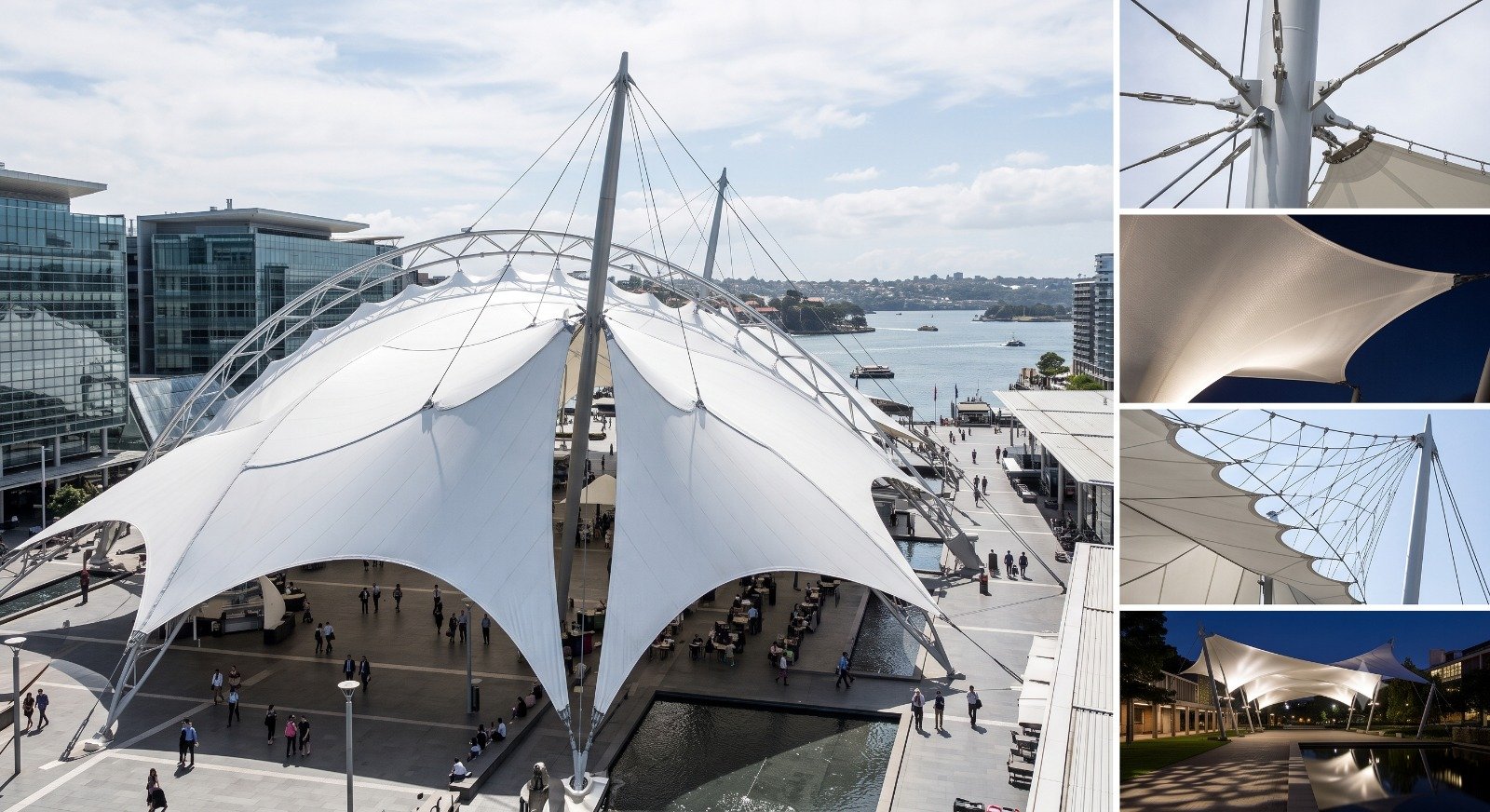
What Exactly Is a Tensile Fabric Structure? A Complete Guide
You do not need to be an architect or a contractor to have walked under a tensile fabric structure. If you have parked your car under a curved canopy at a mall, waited at a bus terminal with a sweeping fabric roof overhead, or attended a wedding under a large tent, you have already experienced this kind of engineering firsthand. It is one of those things that quietly shapes daily life without most people ever asking how it works or who builds it.
This guide is written for anyone curious about tensile fabric structures, whether you are a homeowner exploring shade options, a business owner planning a parking area, an institution looking at campus infrastructure, or simply someone who wants to understand what these fabric roofs are actually made of.
What Exactly Is a Tensile Fabric Structure
At its core, a tensile structure is a roofing or shading system built by stretching a strong, coated fabric across a frame of cables, poles, or steel supports. The fabric is pulled tight in multiple directions, which is what gives these structures their curved, sail like shapes. That tension is also what makes them strong enough to handle wind, rain, and years of sun exposure.
The material used is not ordinary cloth. It is a specially engineered tensile membrane, usually a polyester or fiberglass base coated with PVC or PVDF, designed to resist tearing, UV damage, and weathering over long periods.
A Legacy Behind the Fabric
Not many people realize that this industry in India has roots going back decades. Companies like Lucky International, part of a group with a long standing history in coated textiles, have been manufacturing and supplying these materials long before tensile architecture became a common sight in Indian cities. What started as supplying coated fabrics to sectors like railways and defense has grown into a specialized focus on architectural and industrial fabric solutions.
This kind of long standing experience matters more than it might seem. Fabric structures are exposed to real world stress, monsoon winds, intense heat, and constant UV radiation, and it takes years of manufacturing knowledge to get the coating formulation and fabrication process right.
Where You Will Actually See These Structures
Fabric membranes show up in far more places than most people expect. A few common examples include:
- Car parking shades outside malls, offices, and residential complexes
- University and school campuses using fabric canopies for courtyards and walkways
- Airport terminals and bus stations that need wide, column free covered spaces
- Restaurants and outdoor dining areas using fabric roofing for weather protection
- Market tents and event structures for weddings, exhibitions, and festivals
- Biogas covers and industrial tank liners, a less visible but important application
Institutions such as Pune University and Lovely Professional University, along with public infrastructure like airport terminals in cities such as Ranchi and Rajkot, have used tensile membrane roofing for exactly these reasons. These are not experimental installations anymore, they are proven solutions used across both public and private projects.
Why People Choose Fabric Over Traditional Roofing
There is a practical reason fabric structures keep showing up in so many settings. A few advantages stand out:
- Faster construction timelines compared to concrete or metal roofing
- Lighter structural load, which reduces foundation and support requirements
- Natural daylight filtering through without harsh glare or excessive heat
- Design flexibility, allowing curved and sculptural shapes that flat roofing cannot achieve
- Long service life when the fabric is manufactured and installed correctly
That last point is worth pausing on. A tensile structure is only as good as the tensile membrane fabric used to build it. Cheaper, poorly coated material tends to fade, sag, or crack within a few years, while properly manufactured fabric can last well beyond a decade with minimal maintenance.
PVC and PVDF Fabric, What Is the Difference
If you start researching this topic, you will quickly run into two terms, PVC and PVDF. Both are coatings applied to a woven polyester base, but they behave differently over time.
PVC coated fabric is the more common, cost effective option, widely used for parking shades, tents, truck covers, and general architectural structures. PVDF coated fabric adds an extra top layer that improves resistance to dirt buildup, UV yellowing, and staining, making it a better fit for structures that need to keep their appearance over many years, such as visible public infrastructure or premium architectural projects.
Manufacturers like Lucky International, which produce both PVC and PVDF fabric in house, are able to guide buyers toward the right grade based on the specific application rather than pushing a one size fits all product.
Choosing the Right Fabric Membrane Manufacturer
Whether you are planning a small residential shade structure or a large public project, the manufacturer you choose matters just as much as the design itself. A few things worth checking before committing to a supplier:
- Do they manufacture the fabric themselves or resell someone else's stock
- Can they show completed projects similar in scale to yours
- Do they provide technical specifications and test certificates
- Are they able to support both material supply and installation guidance
Working with an established Fabrics Manufacturers and Supplier in India rather than a smaller trader tends to reduce the risk of inconsistent quality, delayed timelines, and disputes after installation. Long standing manufacturers have also usually built relationships with global technical textile partners, which brings access to better raw material and coating technology.
A Quick Look at the Bigger Picture
Fabric architecture in India has moved well past its early days of temporary tents and exhibition stalls. It is now a serious part of how airports, universities, commercial complexes, and public infrastructure projects are being designed and built. As more people become aware of the benefits, faster construction, lower long term cost, and striking visual design, demand for quality tensile fabric structures is only expected to grow across both metro cities and smaller towns.
FAQs
Q1. Is tensile fabric roofing durable enough for permanent structures?
Yes, when made from high quality fabric membranes and installed correctly, tensile structures can last well over a decade and are widely used for permanent architectural applications, not just temporary setups.
Q2. What is the difference between PVC and PVDF fabric?
PVC fabric is more affordable and suitable for general use, while PVDF fabric offers better resistance to UV damage, dirt, and staining, making it ideal for structures that need to retain their appearance longer.
Q3. Can tensile structures be used for small residential projects?
Absolutely, tensile fabric is commonly used for car parking shades, patio covers, and garden canopies at a residential scale, not just large commercial or institutional projects.
Q4. How do I know if a supplier's fabric quality is reliable?
Ask for test certificates, check whether they manufacture the material themselves, and look at completed projects of similar size and application before finalizing an order.
Q5. Who manufactures tensile fabric and membrane structures in India?
Established manufacturers like Lucky International produce PVC and PVDF fabric in house and have supplied material for projects ranging from university campuses and airports to parking shades and event structures across India.