


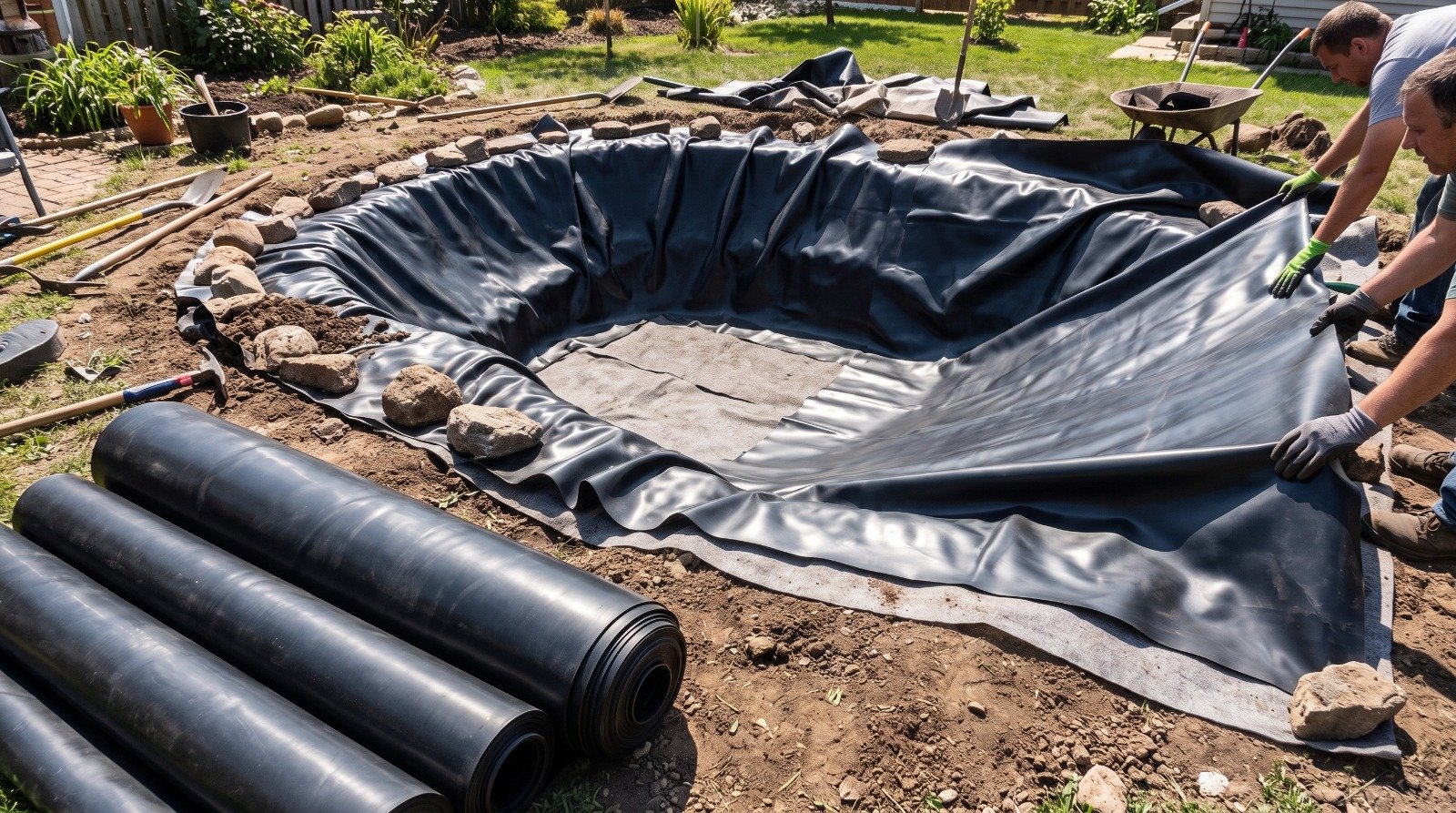
What Is a Pond Liner? A Beginner's Guide
If you're building a pond, whether it's a small garden feature or a large commercial water body, you've probably come across the term pond liner and wondered what it actually does. This post covers the basics in plain language, so you know exactly what you're looking at before you buy one.
What Is a Pond Liner?
A pond liner is a flexible, waterproof sheet placed at the bottom and sides of a pond to stop water from seeping into the ground. Without it, most soil types absorb water over time, and the pond simply drains itself dry.
Liners are usually made from materials like PVC, HDPE, or EPDM rubber. Each material has different strengths, but the goal is the same: hold water in place without leaking, cracking, or breaking down under sun and weather exposure.
How Does a Pond Liner Work?
The idea is simple. The liner acts as a physical barrier between the water and the soil underneath. It gets laid across the excavated pond area, shaped to fit the contours, and sealed at the edges above the waterline.
A few things decide how well it performs.
- Flexibility: A good liner needs to stretch and mold around uneven ground without tearing.
- UV resistance: Since most ponds sit exposed to sunlight, the liner has to resist breaking down from constant UV exposure.
- Puncture resistance: Roots, rocks, and general ground movement can damage a liner over time, so thickness and material strength matter.
- Chemical resistance: For ponds that hold fish or aquatic plants, the liner needs to be safe and stable, without leaching anything harmful into the water.
Where Are Pond Liners Used?
Pond liners show up in more places than people expect. Some common uses include:
Ornamental garden ponds and water features Fish farming and aquaculture ponds Irrigation and farm water storage ponds Golf course water bodies Effluent treatment and industrial water ponds Rainwater harvesting pits
Basically, anywhere water needs to be held in one place without soaking into the ground, a liner becomes the practical solution.
What Type of Fabric Is Used to Make Pond Liners?
Most modern pond liners are made from PVC coated fabric, where a woven base is coated on both sides to create a strong, flexible, waterproof sheet. This is the same coating process used across a lot of technical textile products, just adapted for continuous water contact.
For beginners exploring this category, it helps to know that pond liners fall under the same PVC coated fabric for beginners umbrella as tarpaulins, covers, and tank liners. The base material logic stays similar, but the coating formulation and thickness get adjusted for constant water exposure and UV load.
How Do You Choose the Right Pond Liner?
A few basic questions help narrow down the choice.
How large is the pond, and does the liner come in a size that avoids too many joints? Will the pond hold fish, or is it purely decorative? Is the pond indoors, outdoors, or partially shaded? Does the area get extreme heat, cold, or heavy rainfall?
Answering these upfront saves a lot of trial and error later, especially for larger ponds where replacing a liner means draining the whole structure.
Who Manufactures Pond Liners in India?
India has severalPond Liners Manufacturers and Supplier in India producing PVC coated fabric suited for both small scale and large commercial pond projects. Working with a manufacturer that understands coating thickness, seam welding, and UV stabilization tends to give a longer lasting result than a generic tarpaulin sold as a liner.
luckyinternational works as one of theFabrics Manufacturers and Supplier in India , producing PVC coated fabric used across pond liners, covers, and related technical textile applications. For anyone sourcing at scale, going directly to a manufacturer like luckyinternational usually means more consistency across large orders compared to buying through a reseller.
FAQs
How long do pond liners usually last?
Depending on material and thickness, a good quality PVC pond liner can last anywhere from 10 to 20 years with proper installation and care.
Can pond liners be repaired if they get punctured?
Yes. Most PVC liners can be patched using heat welding or adhesive patch kits, as long as the damage is caught early.
Is a thicker pond liner always better?
Not necessarily. Thickness should match the application. A small decorative pond doesn't need the same gauge as a large fish farming pond exposed to heavy foot traffic or animal activity.
Do pond liners affect water quality?
A properly manufactured liner, especially one rated for aquatic use, shouldn't leach chemicals into the water. This is why sourcing from a known manufacturer matters more than picking the cheapest option available.
Can one pond liner cover any pond shape?
Liners are flexible enough to mold around most shapes, but very large or irregular ponds sometimes need custom sized sheets or seam welded panels to avoid excess folding.