


What Is an Oil Spill Boom? Types, Working and Fabric Explained
If you work in marine operations, ports, or environmental response, you've probably come across the term oil boom. This guide explains what a boom for oil spills is, how it works, the different types available, and the coated fabric that makes it effective.
What is an Oil Spill Boom?
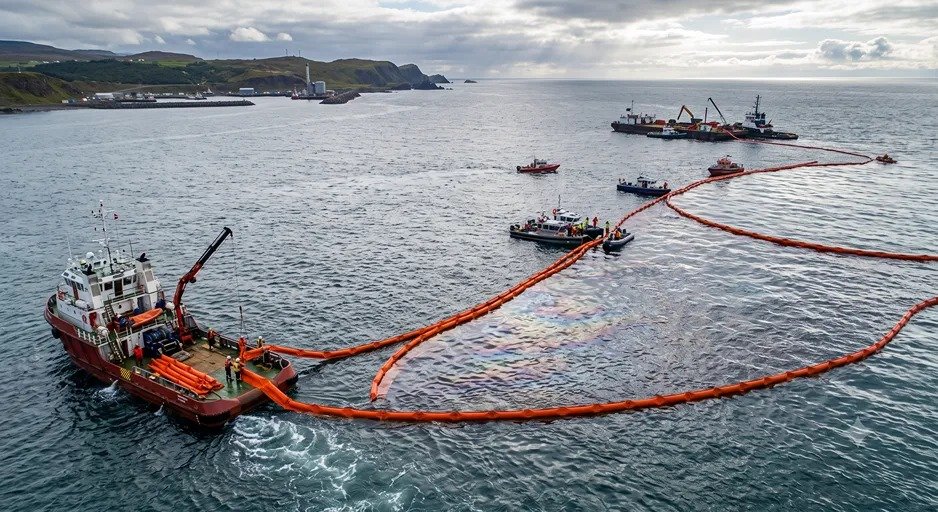
An oil spill boom is a floating barrier used to contain and control oil on the surface of water. When oil spills into a river, harbour, or sea, a boom is placed around the affected area to stop the oil from spreading further. It floats on the water's surface, with part of the barrier sitting above the waterline and part below, forming a physical wall that keeps oil contained until it can be collected or cleaned up.
So when people ask what is an oil boom, the simple answer is this: it's a containment tool, not a cleanup tool on its own. It holds the oil in place so cleanup crews can do their work more effectively.
How Does an Oil Boom Work?
An oil boom works using a simple principle. The section above the waterline, called the freeboard, stops oil from splashing or spreading over the top. The section below the waterline, called the skirt, stops oil from escaping underneath. Together, these two parts create a barrier that traps floating oil within a set area.
Booms are usually connected in sections and anchored or towed into position, depending on whether the water is calm or moving. In rivers and harbours, they are often anchored in a fixed position. In open water, they may be towed behind a vessel to sweep and contain a spill.
Types of Oil Spill Booms
Containment booms These are the most common type, used to surround and hold a spill in one place, stopping it from spreading to a larger area.
Sorbent booms These booms are designed to absorb oil as well as contain it, making them useful for smaller spills or as a secondary layer of protection.
Fire-resistant booms Used in situations where spilled oil may need to be burned off as part of the cleanup process, these booms are built to handle high heat.
Harbour and river booms Designed for calmer, more sheltered waters, these are typically lighter and easier to deploy quickly around ports, marinas, and inland waterways.
The right type depends on the water conditions, the size of the spill, and how quickly the boom needs to be deployed.
Oil Boom Fabric: Why It Matters
The fabric used to make an oil boom has a direct impact on how well it performs. A boom needs to stay afloat, resist damage from oil and saltwater, and hold its shape under constant wave movement, so the material it's built from really matters.
PVC coated fabric is widely used in oil boom construction because it's flexible, resistant to oil and weather exposure, and strong enough to handle repeated use in tough marine conditions. This is why working with a reliable PVC oil boom manufacturer matters just as much as the design of the boom itself. The quality of the coated fabric affects how long the boom lasts and how well it holds up during an actual spill response.
At Lucky International, we work as PVC Fabrics Manufacturers and Supplier, providing coated fabric for oil spill booms and other marine applications built to perform in demanding conditions. As Oil Spill Boom fabric Manufacturers, our focus is on supplying a material that stays reliable when it matters most.
Who Uses Oil Spill Booms?
Oil spill booms are used by ports, shipping companies, marine terminals, environmental response teams, and government agencies responsible for protecting waterways. They are a standard part of spill response planning for any facility that handles oil near water.
FAQs
What is an oil spill boom used for?
It's used to contain and control oil on water, stopping a spill from spreading while cleanup crews respond.
What is the difference between a containment boom and a sorbent boom?
A containment boom holds oil in place, while a sorbent boom both contains and absorbs oil.
What fabric is used to make oil booms?
PVC coated fabric is commonly used because it's flexible, oil-resistant, and built to handle marine conditions.
Can oil booms be reused?
Yes, most oil booms made with quality coated fabric can be cleaned and reused for future spill response.