


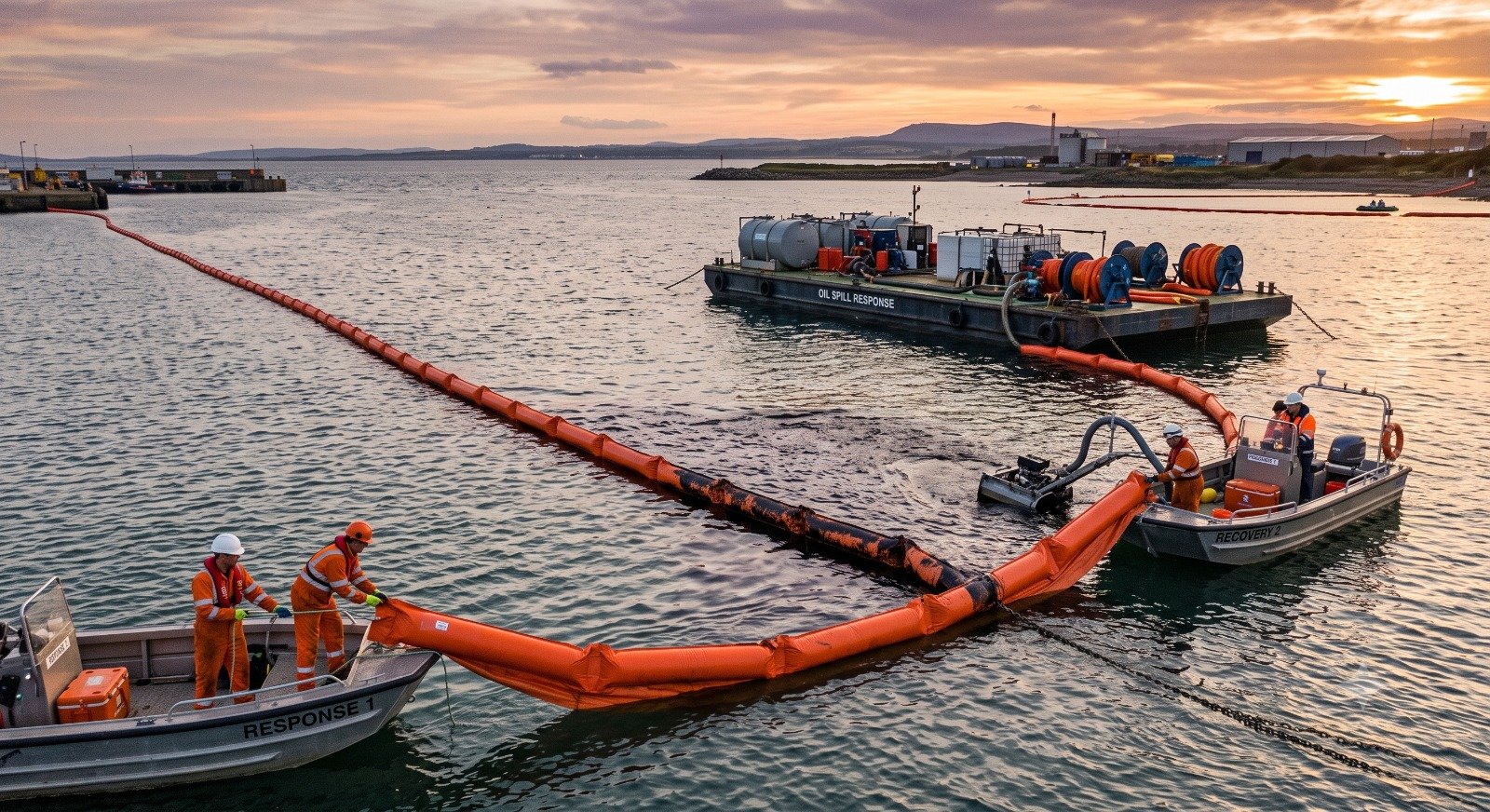
When an oil spill happens on open water, in a harbour, or along a riverbank the response team's first move is almost always the same: get a boom in the water fast. That boom is only as good as the fabric it's made from. Oil spill boom fabric has to float reliably, shrug off contact with crude and refined petroleum products, and hold its shape under constant wave action for as long as containment is needed. Here's what actually goes into making that possible.
Buoyancy: Staying on the Surface, Not In It
A boom that sinks or rolls under the surface is useless oil simply slips beneath it. Buoyancy in a containment boom comes from a closed-cell foam or inflatable air chamber running the length of the boom, wrapped in a coated fabric skin. The fabric's job here is to stay sealed and airtight (or foam-tight) under constant flexing, wave slap, and UV exposure, so the flotation core keeps doing its job for the full duration of a spill response, which can stretch from hours to weeks.
Chemical Resistance: The Part That Can't Fail
This is the single most important property of oil boom fabric. Crude oil, diesel, and refined petroleum products are aggressive on ordinary textiles they soften coatings, swell seams, and eventually cause a boom to weep or fail exactly where it's needed most. A PVC or PVDF coated fabric engineered for oil containment is formulated specifically to resist swelling and degradation on prolonged contact with hydrocarbons, so the boom stays structurally sound even after extended exposure rather than breaking down mid-response.
Tear and Abrasion Strength
Booms don't sit still. They get dragged into position by boats, anchored against current, and repeatedly rubbed against hulls, docks, and debris in the water. The base fabric underneath the coating typically a high-tenacity woven polyester scrim is what gives the boom its tear resistance, while the coating layer handles abrasion and puncture resistance at the surface. Weak stitching or a thin coating is usually where field failures start, which is why the fabric specification matters more than almost any other design choice in a boom.
UV and Weathering Stability
Spill response equipment often sits in storage for years before it's ever deployed, then gets used in direct sun for days at a stretch during an actual response. A coated fabric that isn't UV-stabilised will stiffen, crack, and lose flexibility exactly when it's needed to flex with the waves. Quality oil boom fabric is formulated to resist UV breakdown so the material stays pliable through both long-term storage and active deployment.
Seam and Weld Integrity
A boom is only as strong as its weakest seam. Coated fabrics used in boom construction need to be weldable typically via RF or hot-air welding so seams form a continuous, watertight bond rather than a stitched line that oil and water can work through over time. This is a fabric-level requirement: not every coated textile welds cleanly, and it's one of the first things a boom fabricator checks before committing to a material.
Why the Fabric Supplier Behind the Boom Matters
All of the above buoyancy retention, chemical resistance, tear strength, UV stability, and weldability comes down to the base fabric and coating formulation, not the finished boom design. Boom fabricators, marine equipment suppliers, and spill response contractors depend on getting consistent, tested coated fabric batch after batch, because a single weak roll of material can mean a boom that fails in the field.
Lucky International works as one of the leading Fabrics Manufacturers and Supplier in India, producing the PVC and PVDF coated technical textiles used in oil spill boom fabric and related marine and industrial fabric applications. As one of the trusted Oil Spill Boom fabric Manufacturers, they supply fabricators, dealers, and businesses looking for consistent, tested material the raw fabric quality that ultimately determines how the finished boom performs on the water.
FAQs
What makes a fabric suitable for oil spill booms?
It needs reliable buoyancy support, strong resistance to crude and refined petroleum products, high tear and abrasion strength, UV stability, and the ability to form clean, watertight welded seams.
Can the same coated fabric be used for both inland and offshore booms?
Often yes, provided the fabric is rated for the chemical exposure and UV conditions involved — offshore use typically demands higher weathering resistance due to longer deployment times.
How long does oil boom fabric typically last in storage?
A properly UV-stabilised and well-stored coated fabric can remain serviceable for years before deployment, though periodic inspection is recommended.
Does the fabric affect how easily a boom can be repaired in the field?
Yes — weldable coated fabrics allow for faster, more reliable field repairs than fabrics that rely only on stitched or adhesive seams.