


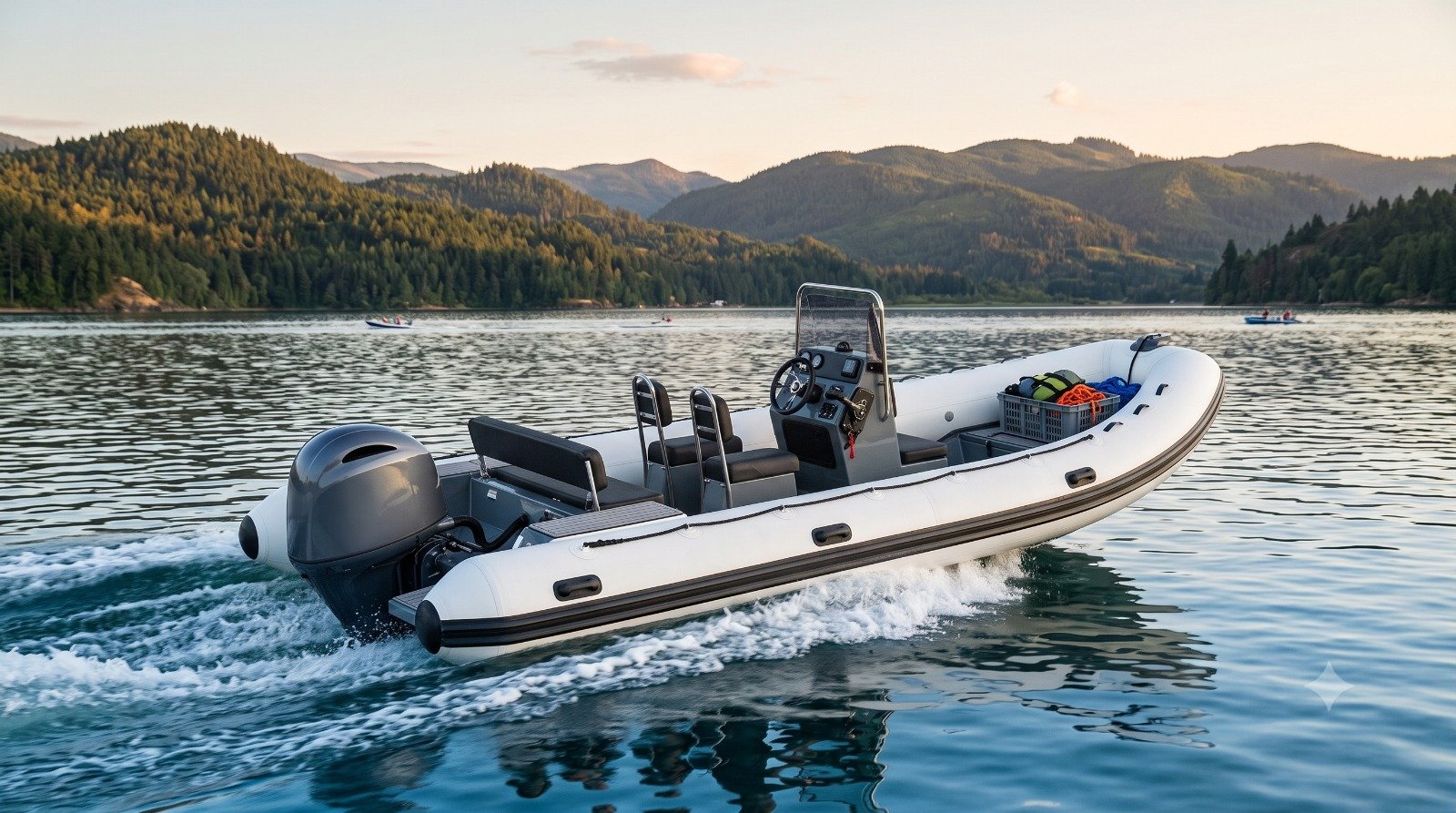
Anyone who's spent time around inflatable boats knows they take a beating — sun, salt water, rocky shorelines, constant inflation and deflation, and years of handling. Yet a well-made inflatable boat can last for seasons without losing its shape or springing a leak. The reason usually has very little to do with the boat's design and everything to do with the fabric it's built from.
That fabric is PVC coated textile, and understanding why it works so well for marine use tells you a lot about what separates a boat that holds up from one that doesn't.
Why Marine Environments Are So Demanding on Fabric
Water isn't the only challenge an inflatable boat's fabric has to deal with. Think about everything it's exposed to in a single outing:
- Constant UV exposure from sun reflecting off water
- Saltwater, which is far more corrosive than fresh water
- Abrasion from rocks, docks, sand, and rough handling
- Repeated flexing as the boat inflates, deflates, and moves with the water
- Temperature swings between storage and open water use
Ordinary fabric wouldn't survive this combination for long. This is why inflatable boats rely on PVC & PVDF coated fabric manufacturers who understand marine-specific demands, not general-purpose coated textile producers.
What PVC Coating Actually Does for Marine Fabric
The base fabric — usually a tightly woven polyester — gives the material its structural strength. The PVC coating layered onto that base is what makes it usable in water at all. It creates a waterproof barrier, resists saltwater corrosion, and adds flexibility so the fabric can handle constant flexing without cracking or losing its seal.
PVDF coating, where used, adds an extra layer of resistance to UV degradation and harsh weather — useful for boats that spend long stretches in direct sun or in more extreme marine conditions. Either way, the coating is doing the heavy lifting that keeps the boat airtight and afloat, trip after trip.
Where Seam Strength Comes In
A lot of inflatable boat failures don't happen because the fabric itself gave out — they happen at the seams. Marine-grade coated fabric needs to bond cleanly at welded or glued joints, since that's where pressure and stress concentrate every time the boat is inflated. This is one of the less talked-about but genuinely important reasons why sourcing fabric from an established, experienced supplier matters more than it might seem.
Why Sourcing Matters as Much as Specification
It's tempting to think any PVC coated fabric that meets a spec sheet will perform the same way on the water. In practice, coating consistency, lamination quality, and how well a manufacturer tests its material for marine-specific stress make a real difference over the life of the boat.
This is exactly why boat builders and fabricators increasingly look toward specialised fabric manufacturers and suppliers in India, where coated textile production for marine and industrial applications has matured significantly. At Lucky International, this marine-use fabric is developed with exactly these pressures in mind — durability against saltwater, UV resistance, and consistent seam performance across long-term use, rather than just meeting a baseline coating spec.
Who Uses This Fabric
PVC coated marine fabric isn't limited to recreational dinghies. It's used across:
- Inflatable rescue and patrol boats
- Recreational and sport inflatable boats
- Commercial and fishing inflatables
- Boat fabricators and manufacturers sourcing raw material
- Repair and refurbishment of existing inflatable boats
What to Check Before Choosing Marine Fabric
A few practical points worth confirming with any supplier:
- Whether the coating is PVC or PVDF, and which suits your usage conditions
- How the fabric performs under sustained UV and saltwater exposure
- Seam and weld compatibility, since this affects long-term durability
- The manufacturer's experience specifically with marine-grade applications
- Consistency across production batches, not just a single sample
Frequently Asked Questions
Is PVC coated fabric better than PVDF for inflatable boats?
Both perform well for marine use — PVC is a reliable, cost-effective choice for general boating conditions, while PVDF offers added resistance for boats facing harsher sun and weather exposure.
How long does inflatable boat fabric typically last?
With proper care and storage, quality marine-grade coated fabric can perform reliably across many seasons of regular use.
Can inflatable boat fabric be repaired if it gets punctured?
Yes, PVC coated fabric can generally be patched or repaired using compatible adhesives or welding methods suited to the coating type.
Does the fabric affect how the boat handles in water?
Fabric weight and flexibility play a role in overall boat performance, alongside hull design and the boat's intended use.