


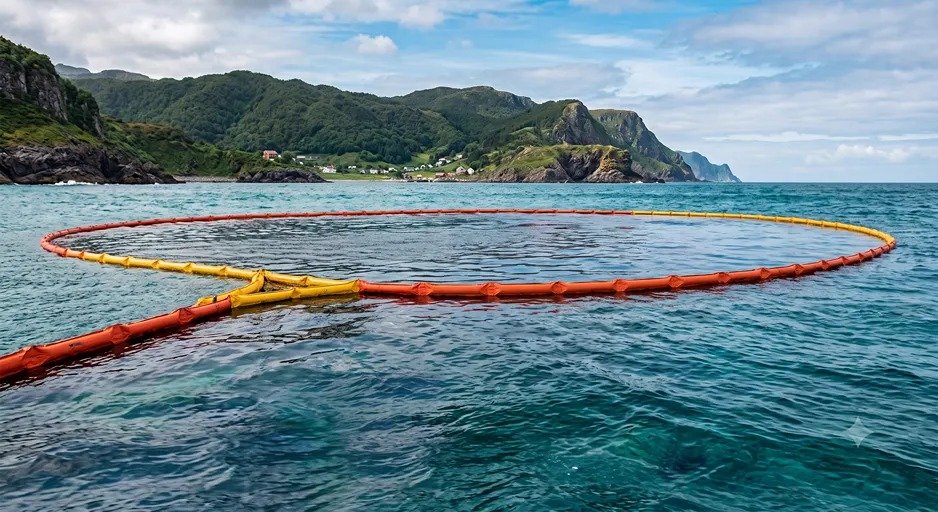
Why Coated Fabric Is Central to Oil Boom Performance
Oil spills don't wait for perfect conditions. Whether it's a harbour, a river, or open water, the boom deployed to contain a spill has to work immediately and keep working under pressure. At the centre of every reliable boom is the fabric it's made from. Get the fabric right, and the boom holds its shape, floats correctly, and stops oil from spreading. Get it wrong, and containment fails when it matters most.
This guide looks at why coated fabric matters so much in oil boom design, and what to check for when sourcing it.
Why Coated Fabric Is Central to Boom Performance
An oil boom is really a floating barrier, and its fabric skin does most of the work. It has to stay buoyant, resist the pull of currents, and hold its form while under constant contact with oil, water, and sometimes chemical dispersants. A weak or poorly coated fabric can stretch, crack, or let oil seep through the seams, which defeats the purpose of deploying a boom in the first place.
This is why containment specialists treat coated fabric oil boom containment as a specialised category, not a generic tarpaulin application.
What Makes Coated Fabric Suitable for Oil Boom Use
1. Oil and Chemical Resistance
The fabric sits in direct, prolonged contact with crude oil, fuel, and sometimes dispersant chemicals. It needs a coating that resists breakdown from these substances instead of softening or degrading over time.
2. Buoyancy and Flexibility
Booms need to flex with waves and currents while still holding their shape. Fabric that's too stiff cracks under movement; fabric that's too soft loses its form and containment ability.
3. Seam and Weld Strength
Booms are built from welded or sealed panels. If the seams are weak, oil finds its way through. Strong, consistent welding is just as important as the base fabric itself.
4. Weather and UV Resistance
Spill response can mean days or weeks of continuous deployment in open water, under direct sun and salt exposure. The fabric has to hold up for the full duration of the containment effort.
5. Supply Reliability
Spill response equipment is often ordered in advance and stored for readiness, or ordered urgently once an incident happens. Either way, having a dependable oil boom fabric supplier matters as much as the fabric specification itself.
Choosing a Marine Containment Fabric Supplier
Not every fabric supplier understands the specific demands of spill containment. A good marine containment fabric partner should be able to speak to oil resistance, weld quality, and buoyancy requirements — not just general tarpaulin durability. This distinction matters when the fabric is going into safety-critical equipment.
For teams sourcing oil spill barrier material or floating boom fabric at scale, working with a supplier who understands both the fabric science and the practical demands of spill response makes procurement far more straightforward.
How Lucky International Supports Oil Boom Manufacturers
Lucky International supplies PVC and PVDF coated fabric suited to demanding containment applications, including oil booms. As one of the Fabrics Manufacturers and Supplier names sourced by boom fabricators, the focus is on fabric that performs consistently under oil, water, and weather exposure.
Why Boom Fabricators Choose Lucky International
- Oil-resistant coating options — PVC and PVDF fabrics selected for their resistance to oil, fuel, and chemical exposure.
- Reliable weld performance — fabric that welds cleanly for strong, leak-resistant boom seams.
- Consistent bulk availability — supply planned around the volumes containment manufacturers actually need.
- A trusted name among Oil Spill Boom fabric Manufacturers — fabric sourced with spill-response reliability in mind.
Conclusion
Effective oil boom containment starts with the fabric long before a boom ever touches water. Oil resistance, buoyancy, strong seams, and weather durability all have to work together, and that combination depends on sourcing fabric from a supplier who understands what spill response actually demands. Lucky International brings that focus to manufacturers building containment equipment they can trust.
Frequently Asked Questions
What type of fabric is used in oil booms?
PVC and PVDF coated fabrics are common choices because they resist oil and chemical exposure while staying flexible enough to float and flex with water movement.
How long does oil boom fabric need to last in the field?
It depends on the deployment, but fabric is chosen to withstand continuous exposure to sun, salt, and oil for the full length of a containment operation.
Why does seam strength matter so much in oil booms?
Seams are the most likely failure point. Weak seams let oil pass through even when the fabric itself is strong, so weld quality is just as important as the material.
Can the same fabric be used for other containment equipment?
Yes. Coated fabric built for oil resistance and durability is often used across other marine containment and barrier applications as well.